
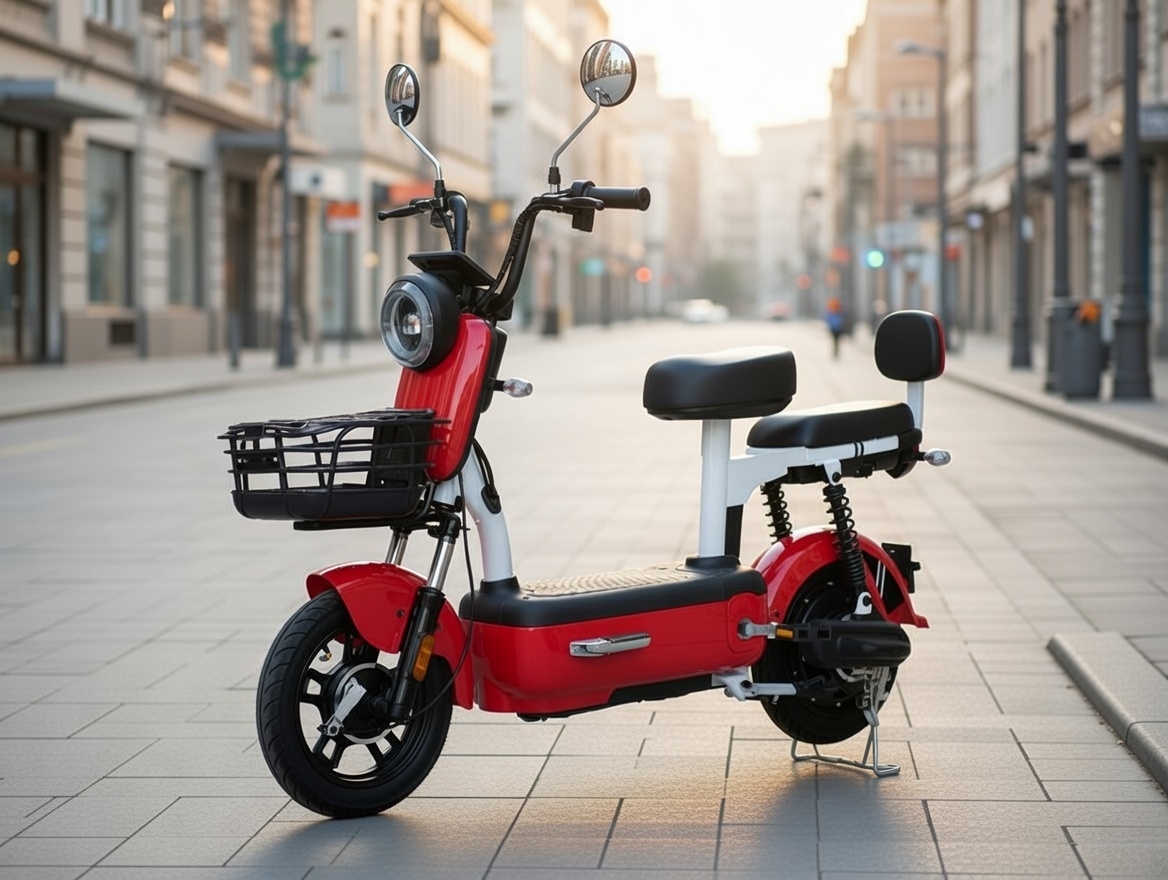
From a purely functional perspective, owning both a car and an electric scooter can appear redundant.
A car already covers most transportation needs: distance, comfort, capacity, and reliability.
However, when daily mobility is examined through a decision-effort and usage-frequency lens, a different conclusion emerges.
This is not a lifestyle choice.
It is a structural one.
Cars Are Optimized for Planned Transportation
Cars perform best in scenarios that are:
- Purpose-driven
- Time-bound
- Distance-heavy
- Logistically defined
They assume that each trip justifies a full operational cycle:
planning, driving, parking, and return.
For business travel, long commutes, or equipment transport, this model works exceptionally well.
But not all movement fits this structure.

The Overlooked Category: Low-Stakes Urban Mobility
In dense urban environments, a significant portion of daily movement falls into a different category:
- Short-distance trips
- Low urgency
- Undefined or flexible destinations
- High frequency, low payoff
In these cases, the limiting factor is not speed or cost —
it is decision friction.
When the cognitive and logistical cost of using a car exceeds the value of the trip itself, mobility becomes deferred or avoided altogether.
That inefficiency often goes unnoticed because it does not appear on a balance sheet.
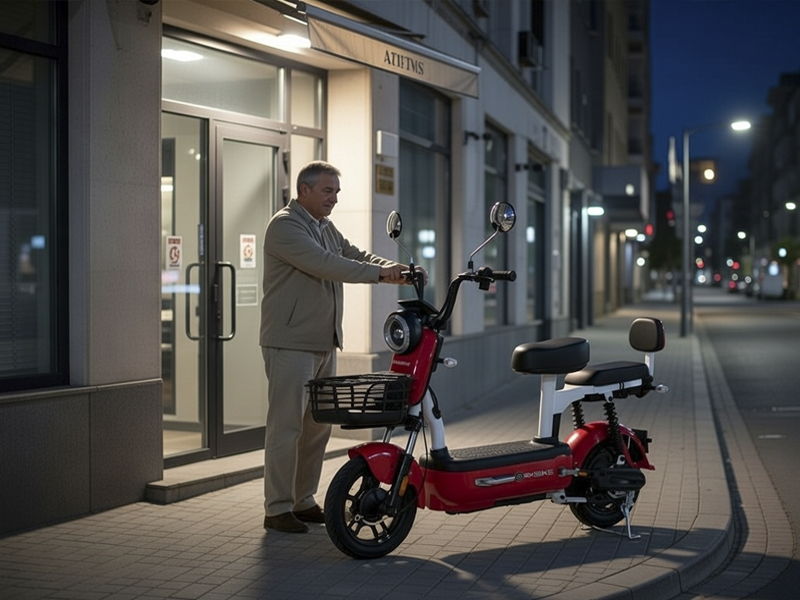
Electric Scooters as a Friction-Reduction Tool
An electric scooter does not compete with a car on performance.
It competes on activation energy.
Key characteristics:
- Minimal preparation
- Negligible parking constraints
- Low mental overhead
- Immediate availability
The value proposition is not efficiency in transit, but efficiency in decision-making.
By reducing the number of steps required to initiate movement, electric scooters enable a category of trips that would otherwise be postponed or abandoned.
Rethinking “Redundancy” in Mobility Systems
From a systems perspective, redundancy is only wasteful when two tools solve the same problem under the same conditions.
In practice:
- Cars optimize for destination certainty
- Electric scooters optimize for mobility optionality
They operate in adjacent but distinct domains.
Owning both does not duplicate capability;
it extends coverage across different decision thresholds.
A Practical Allocation of Roles
In a balanced urban mobility setup:
- Cars remain the default for long-range, high-commitment transportation
- Electric scooters serve short-range, low-friction movement
This division reduces overall cognitive load while increasing mobility responsiveness.
The result is not faster transportation, but more consistent movement.
And in both personal and professional contexts, consistency often matters more than peak performance.
The Broader Implication
The question is not whether an electric scooter replaces a car.
It doesn’t.
The more relevant question is:
How much decision friction is acceptable before mobility becomes inefficient?
In environments where time, focus, and mental bandwidth are limited, tools that reduce friction — even marginally — can justify their place.
That is why, even with full access to a car,
an electric scooter remains a rational addition rather than a redundant one.

