
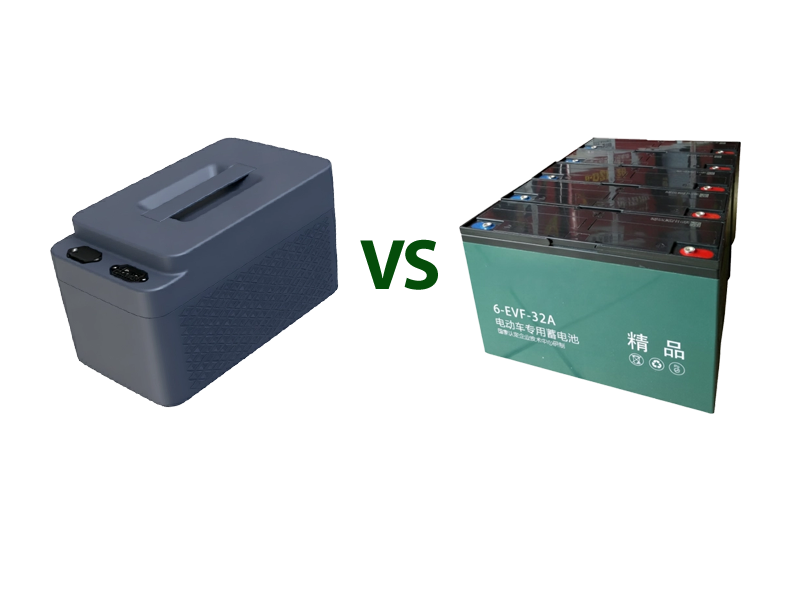
Imagine your e-bike is running a marathon. Now, imagine it running that marathon while carrying a backpack full of bricks. That is essentially the difference between choosing an older lead-acid battery versus a modern lithium-ion pack.
While lead-acid might seem cheaper upfront, it comes with a massive weight penalty. To get the same range, a lead-acid system is often three times heavier and larger than its lithium counterpart. This isn’t just about dead weight; it affects your bike’s handling, acceleration, and how hard it is to carry the battery upstairs.”
The biggest game-changer for daily riders isn’t just the weight—it’s the convenience. Because lead-acid batteries are so heavy, they are rarely designed to be easily removable. This means you have to bring the whole bike to the power outlet, often leaving it in a cold garage or trailing extension cords outside.
Modern lithium e-bikes are designed for city living. The batteries pop out in seconds. You can carry them into your office, a coffee shop, or your fifth-floor apartment with one hand and charge them just like your laptop. It’s seamless integration into your life versus a daily chore.
If batteries were athletes, the lead-acid battery retires after about 400 races. The lithium battery is just getting warmed up, easily lasting 1,500 cycles or more with proper care.
Inside, they are worlds apart. Lead-acid is 150-year-old technology involving heavy plates submerged in acid, which degrades every time you use it. Lithium-ion packs are sophisticated electronic devices, managed by a smart Battery Management System (BMS) that balances cells and protects them from damage. While the initial cost of lithium is higher, you will likely replace a lead-acid battery three times before your first lithium pack wears out.
Comparison Summary Table :
| Feature | Lead-Acid Battery | Lithium-Ion Battery | Winner |
|---|---|---|---|
| Weight & Bulk | Very Heavy & Large | Lightweight & Compact | Lithium |
| Lifespan (Cycles) | Short (~300-500) | Long (~1000-2000+) | Lithium |
| Charging | Usually requires charging the whole bike; Slow | Removable battery; Faster charging | Lithium |
| Maintenance | May require water top-ups | Zero Maintenance | Lithium |
| Upfront Cost | Low | High | Lead-Acid |
| Long-Term Value | Poor (frequent replacements) | Excellent | Lithium |

